



























Wire Wheels and Brushes: How to Choose the Right One

Why is your wire wheel throwing sharp needles, leaving deep scratches, or refusing to fit your angle grinder? It usually comes down to a common workshop mistake: running the wrong wire configuration at the wrong speed on the wrong material.
In a busy metal fabrication shop or home garage, choosing the wrong brush does far more than ruin your surface finish. It wastes valuable prep time, contaminates expensive metals, and creates serious safety hazards for everyone in the shop.
This selection guide simplifies your choice by focusing on tool fit, aggressiveness, finish, and operator safety. We break down brush versus wheel formats, knotted versus crimped wire styles, and material compatibility so you can make the right call every time.
Start by choosing the right format for your tool, beginning with the difference between a wire brush and a wire wheel.
Wire Wheel vs. Wire Brush: How Tool Geometry Prevents Workpiece Gouging
Why does that brand-new wire brush keep gouging your metal or shedding its wires? Grabbing the wrong shape is a quick way to ruin a workpiece because "wire brush" and "wire wheel" are not interchangeable terms. Each format contacts the metal differently and excels at a specific range of tasks.
Choose your tool based on workspace geometry:
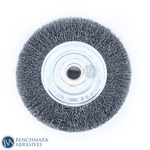
- Wheel brush: Best for narrow channels, weld seams, and fast radial coverage.
- Cup brush: Best for broad flat surfaces, weld toes, and inside corners.
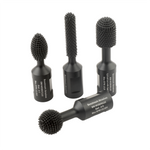
- End brush: Best for tight cavities, internal diameters, and spot-cleaning.
This distinction matters because tool geometry directly dictates your contact patch and control. A wire wheel cleans using only the wire tips rotating perpendicular to the work surface. Forcing a cup brush into a narrow channel, or running a wheel brush over a broad flat plate, delivers poor results and increases operator fatigue.
To protect your workpiece and find the right professional-grade option, browse our Steel Wire Wheels collection to match the exact tool geometry to your job.
A Shop Map of Wire Wheel Types: Matching Geometry to Your Workspace
Imagine trying to clean mill scale out of a tight, 90-degree fillet weld with a massive, flat cup brush, only to watch your angle grinder kick back violently. Or think of prepping a rusted truck frame with a tiny end brush that leaves half the surface untouched. The wrong shape for the job creates more work, not less.
Wire wheel types differ by shape, wire style, material, and mounting. Selecting the right shape makes sure the wire tips contact the metal at the correct angle for maximum cutting action and minimum surface damage.
-
Wheel Brush (Straight): Best for flat surfaces, outer plate edges, and rust removal. Finish: leaves a uniform, coarse brushed texture.
-
Cup Brush: Best for broad flat areas and removing heavy paint or mill scale. Finish: leaves a clean, satin-to-coarse prep finish.
-
Bevel / Saucer Brush: Built with an angled design that gets into fillets, weld toes, and tight corners. Finish: leaves a medium-coarse texture.
-
Stringer Bead / Narrow Face Wheel: High-density, narrow profile for cleaning root passes and deep seams. Finish: aggressive, clean surface.
-
End Brush (Shank): Fits drills or die grinders for cleaning bolt heads, spot welds, and deep recessed pockets. Finish: fine satin prep.
For example, when tackling an automotive frame rust restoration, run a knot-wire cup brush for fast scale removal on the wide rails, then swap to a small shank-mounted end brush for the body mounting pockets.
How to Match a Wire Wheel to Your Angle Grinder (And Prevent Setup Failures)
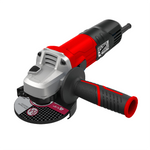
Why does your angle grinder jump, chatter, or violently kick back the moment you touch a wire wheel to metal? This dangerous loss of control usually stems from a fitment mismatch or an improper work angle, and both are 100% preventable.
First, match your tool class. A wire wheel designed for a stationary bench grinder, a high-RPM die grinder, or a standard power drill will not safely mount or operate on a right-angle grinder.
The Fitment Checklist
-
Diameter: Match the exact capacity of your grinder guard. Standard hand grinders use 4- to 4.5-inch wheels, while larger industrial units require 5- to 6-inch options.
-
Mounting Style: Most angle grinder cups and wheels feature threaded hubs. In the U.S., the standard thread is 5/8"-11, while metric tools often use M14 threads. Double-check your spindle size before ordering.
-
Guard Clearance: Never remove your safety guard to force an oversized brush to fit. If it rubs against the guard, it is the wrong size.
The Control Checklist
-
Work Angle: Keep the tool flat enough that only the wire tips make contact. Tilting the tool too steeply causes the wire side to catch, leading to violent kickback.
-
Light Pressure: Let the wire tips do the work. Leaning into the tool bends the filaments, which causes premature wire shedding and drastically shortens tool life.
-
When to Stop: Wire brushes are designed for surface cleaning and rust removal. If you need to reshape metal or grind down heavy welds, switch to grinding cup wheels built for stock removal.
Before mounting, confirm that your grinder's operating speed does not exceed the maximum rating stamped on the brush. Review our guide on understanding RPM ratings on abrasive tools to see how tool speeds affect your safety.
Knotted vs. Crimped Wire Wheels: Dialing In Your Finish
Choosing between a 0.008-inch and a 0.020-inch filament diameter changes your wire brush's impact force by over 300 percent at standard operating speeds. Selecting the right wire wheel requires dialing in three variables: wire knot style, wire diameter, and wire material.
Knotted (Twist-Knot) Wire Wheels
-
Best for: Stripping heavy rust scale, mill scale, thick slag, and aggressive weld cleanup. The twisted wire bundles act as rigid units, hitting the metal with high impact force.
-
Surface Finish: Leaves a rough, highly textured profile that typically requires a secondary polishing step before painting.
Crimped Wire Wheels
-
Best for: Removing light rust, paint preparation, and general cleaning without digging into the parent metal. The individual crimped wires flex independently, which limits aggressive gouging.
-
Surface Finish: Produces a highly uniform, smooth, satin finish ready for immediate coating.
The Third Variable: Wire Diameter
The variable most guides skip is wire diameter. Fine wires (0.005 to 0.008 inches) act like fine-grit sandpaper, offering a light touch and a polished finish. Coarse wires (0.014 to 0.023 inches) cut aggressively and remove heavy contamination fast.
Use this quick application guide to select your setup:
-
Flaking Frame Rust: Run a heavy knotted cup wheel to strip scale, then follow with a crimped wheel for paint prep.
-
Light Surface Oxidation Before Primer: Use a fine crimped wheel to clean the metal surface without altering its profile.
-
Weld Spatter and Heavy Slag: Deploy a heavy-gauge knotted wheel to break through weld buildup quickly.
After heavy brush work, transition to our surface conditioning options to blend away leftover scratches and achieve a paint-ready surface.
Selecting the Right Wire Wheel Material: Why Cross-Contamination Destroys Stainless Steel
Running the wrong wire wheel on a stainless steel workpiece can actually cause it to rust. Many fabricators treat wire material as a minor pricing lever, but it is a critical metallurgical decision.
Match your wire material to the job with these rules:
-
Carbon steel: Use strictly for carbon steel and iron.
-
Stainless steel: Treat as "stainless-only" to preserve corrosion resistance.
-
Brass-coated: Reduces sparking and scratching on soft metals, but will not clear heavy scale.
-
Nylon / abrasive-filled: Good for light cleaning with minimal scratch risk, though removal is slower.
To protect your work, establish a clear workshop system to prevent cross-contamination. Color-code your wire wheels with paint and store them in separate bins. Enforce a strict one-way rule: once a brush contacts one metal type, it stays with that metal type permanently.
Even the right wheel becomes dangerous if the RPM and mounting do not match.
The 60-Second Wire Wheel Safety Check: Preventing Failures and Thrown Wires
Imagine pulling a razor-sharp steel wire filament out of your neck because you mounted a low-RPM bench wheel onto a 12,000 RPM angle grinder. This dangerous scenario plays out in shops when operators mix up wheel ratings, and the result can be catastrophic.
The non-negotiable rule of wire wheel safety is this: your accessory's maximum RPM must be equal to or greater than your power tool's no-load RPM. Bench grinder wire wheels are typically rated for 3,000 to 4,000 RPM. Angle grinders commonly run at 10,000 to 12,000 RPM or higher. Mixing them up is how people get seriously hurt.
Safe operation also requires matching your mounting style exactly:
- Threaded Arbors: Must thread smoothly and sit flush against the spindle shoulder.
- Plain Arbor Holes: Require matching backup flanges and locknuts to center the wheel.
- Shank Mounts: Must insert fully into the collet or chuck.
Never force-fit a mismatch, fabricate makeshift spacers, or modify the wheel.
Before running, perform a 60-second test. Spin the tool at full speed inside a guard while standing to the side. Stop immediately if you feel vibration or wobble.
Discard the wheel immediately if it shows any of these warning signs:
-
Missing wire sectors or large gaps
-
Imbalance, loose knots, or a corroded hub
-
Excessive shedding during use
Standard safety glasses are not enough. Your PPE setup must include safety glasses worn under a high-impact full-face shield, heavy leather gloves, long sleeves, and a protective apron. Keep your shop area clear of bystanders any time a wire wheel is running.
The 6-Step Checklist for Picking Your Next Wire Wheel
Selecting the right wire wheel comes down to matching your tool capacity with your workpiece requirements. Balance geometry, wire aggressiveness, and metallurgy and you avoid ruined finishes, damaged workpieces, and safety incidents.
-
Identify your tool: Note your tool type (angle grinder, drill, or bench grinder) and verify its max RPM capacity. Never mount a low-RPM bench brush on a high-speed angle grinder.
-
Choose the shape: Match the brush shape to your workpiece access. Use flat wheels for narrow channels, cup brushes for broad flat surfaces, bevels for tight corners, or end brushes for recessed pockets.
-
Pick the wire style: Match the style to rust and scale severity. Choose rigid knotted wire for heavy slag and mill scale, or flexible crimped wire for light oxidation and paint prep.
-
Select the wire diameter: Thicker wire (0.014 inches and up) yields high-impact stripping, while thinner wire (0.008 inches and down) is best for gentle surface blending.
-
Match wire material to workpiece: Keep carbon steel with carbon steel. Always use dedicated stainless steel wheels on stainless workpieces to prevent cross-contamination and rust.
-
Confirm, protect, and test: Confirm proper mounting threads, put on your full face shield and PPE, and run a 60-second spin test before touching the metal.
Common Questions About Wire Wheels and Brushes
Which wire wheel is best for rust removal?
For heavy, flaking rust, a knotted cup brush is your best option. The twisted wire bundles provide high-impact cutting action that strips rust fast without clogging. For light oxidation, use a crimped wire wheel. The flexible crimped wires polish the surface rather than cut it, giving you a clean base ready for primer.
Can I use a bench grinder wire wheel on an angle grinder?
No. Bench grinder accessories are typically rated for 3,000 to 4,000 RPM, whereas hand-held angle grinders often spin at over 10,000 RPM. Running a low-RPM accessory at high speed causes the wire wheel to disintegrate, throwing sharp wire fragments at high velocity.
What should I choose for automotive restoration: knotted or crimped wire wheel?
Use a knotted wire wheel for heavy frame and chassis rust, and a crimped wheel for thin sheet metal and body panels. Knotted wheels are too aggressive for thin automotive body panels and will quickly gouge through them. Crimped wire is the right call for delicate prep work.
Why is my wire wheel throwing wires (shedding) so much?
Excessive shedding is usually caused by applying too much pressure, using the wrong work angle, or a speed mismatch. Pushing too hard bends the filaments, which causes them to snap at the root. Keep the work angle flat so only the wire tips touch the surface, and use light pressure to let the wire do the cutting.
Can I use a carbon steel wire wheel on stainless steel just once?
No. Using a carbon steel wire wheel on stainless steel even once will contaminate the surface. Carbon steel leaves tiny iron deposits embedded in the stainless surface, which then causes localized rust. Always use a dedicated stainless steel wire wheel on stainless workpieces.
What should I use instead of a wire wheel if I want a cleaner finish?
For a cleaner, paint-ready finish, use non-woven surface conditioning discs to blend and clean the metal without the aggressive scratch profile that wire wheels leave. If your job requires true stock removal, switch to a grinding disc rated for that material.
Not sure what fits your tool? Contact us before ordering so we can point you to the right setup.
Join Our Newsletter
Sign up to get the latest on sales, new releases and more …Join Our Newsletter
Sign up to get the latest on sales, new releases and more …Shop Categories
Recent Articles
- How to Choose the Right Diamond Blade for Grinder
- Wire Wheels and Brushes: How to Choose the Right One
- How to Deburr Metal Safely and Efficiently
- How to Reduce Heat Discoloration When Grinding Stainless Steel
- How to Achieve a Mirror Finish on Stainless Steel
- A Fabricator’s Guide to Surface Prep Before Powder Coating
- What Causes Burn Marks During Sanding and Grinding, and How to Prevent Them
- Beginner’s Guide to Metal Surface Prep Before Welding
- How to Choose the Right Abrasive Wheel for Your Grinder
- How to Use a Drum Sander: Step-by-Step Guide for Woodworking
Featured Products
-
 746 Reviews
4-1/2" x 7/8" T29 Zirconia High Density Flap Disc - 10 pack
$25.19
-
 738 Reviews
4-1/2" x .040" x 7/8" t1 premium thin cut-off wheel - 25 pack
$20.88
-
 220 Reviews
4-1/2" x 7/8" T27 Zirconia High Density Flap Disc - 10 pack
$25.19
-
 380 Reviews
6" x .045 x 7/8" T1 Premium Thin Cut-Off Wheel - 25 pack
$27.29
-
 55 Reviews
Nonwoven 6" X 9" Scuff, Clean & Finish Hand Pads
$0.83
-
 123 Reviews
4-1/2" x 1/4" x 7/8" T27 Depressed Center Grinding Wheel - 25 pack
$28.34


Blog Categories
- Abrasives
- Sanding
- Grinding Deburring Finishing
- Safety and Cleanliness
- Metal Working
- Selecting Tools And Equipment
- Wood Working
- Art And Design
- Diy Projects
- Industry 4.0
- Buffing
- Cutting Tools
- Carbide Burrs
- PPE
- Wire Brushes
- Bonded Abrasives
- TIG Electrodes
- Wire Wheels
- Bits
- Diamond Blades
- Power Brushes
- Product Reviews
- Grinding
- Finishing
- Industrial Cleaners