



























Beginner’s Guide to Metal Surface Prep Before Welding

Metal surface prep before welding is one of the most important steps in the entire welding process. Clean metal helps improve weld penetration, arc stability, and overall weld strength, while dirty or coated surfaces can lead to porosity, inclusions, and weak joints. If you want better results, proper prep needs to happen before the arc ever starts.
In this beginner’s guide to metal surface prep before welding, you’ll learn how to clean metal for welding, remove rust, mill scale, paint, and other contaminants, and choose the right tools for the job. We’ll cover when to use grinding wheels, flap discs, sanding discs, wire wheels, and die grinder accessories, along with a few key safety tips to help you prep like a pro.
Understanding the Type of Metal You’re Welding
Before you grab a tool, you need to identify your base metal. Every material reacts differently to heat and atmospheric exposure. For most beginners, carbon steel or mild steel will be the primary focus. These are relatively specific to prep, as you mostly deal with rust and mill scale.
However, if you move into aluminum welding, the rules change significantly. Aluminum naturally develops an aluminum oxide layer that has a much higher melting point than the aluminum itself. If you try to weld aluminum without removing this layer, you will trap oxidation inside the joint, leading to a weak weld. Furthermore, the material thickness plays a huge role in your prep.
Prepping thin sheet metal requires a much lighter touch than prepping thick structural steel, as aggressive grinding on thin stock can lead to burn-through or excessive heat input that warps the piece.
Types of Welding and Why Prep Requirements Differ
The welding process you choose dictates how much prep you can get away with. While you should always aim for bare metal, some processes are more sensitive than others.
MIG Welding (Gas Metal Arc Welding)
A MIG welder uses a continuous welding wire that serves as both the electrode and the filler metal. This process relies on metal inert gas to shield the weld pool from the air. Because the MIG wire and the contact tip are part of a high-speed electrical circuit, any dirt or grease in the weld area can disrupt the arc. Cleanliness ensures that the gas can protect the puddle effectively, resulting in clean, strong joints.
Stick Welding (Shielded Metal Arc Welding)
Shielded metal arc welding, or stick welding, is known for being more forgiving of rusted steel. The flux coating on stick electrodes creates its own shielding gas and slag to protect the metal. While a stick welder can burn through some surface impurities, you should still remove thick rust and paint to guarantee appropriate penetration of the weld. Relying on the electrode to do the cleaning often results in excessive slag and a lower-quality finish.
TIG Welding (Gas Tungsten Arc Welding)
TIG welders are the peak of precision. This process uses a non-consumable tungsten electrode and tungsten inert gas. Because the filler metal is added by hand, the tungsten electrode must remain perfectly clean. Even a tiny amount of oil or moisture on the weld surface can contaminate the tungsten, causing the arc to wander and creating immediate weld defects. This is especially true when you weld aluminum with TIG; the surface must be ultra-clean and free of any aluminum oxide layer.
Step-by-Step: How to Prep Metal for Welding
Metal surface prep before welding should follow a clear sequence. Skipping a step can lead to poor arc performance, contamination, and weak welds.
- Inspect the metal for rust, paint, grease, mill scale, or visible damage.
- Remove oil and grease first, so you do not spread contaminants across the surface.
- Strip away rust, paint, galvanized coatings, and mill scale using the right abrasive tools.
- Grind or sand the area until you reach clean, bare metal.
- Wipe the surface down with acetone to remove any remaining oils or residue.
-
Check the joint fit-up to make sure the pieces align properly before welding.
A clean, tight weld joint helps improve weld quality and reduces the need to fill gaps during the welding process.
Grinding Wheels & Flap Discs for Pre-Weld Prep
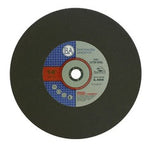
When you have heavy work to do, the grinding wheel is your best companion. These are designed for aggressive material removal and are ideal for grinding off thick mill scale. You can choose between a coarse grit for fast removal or a finer grit if you need to be more precise.
However, grinding wheels can leave deep gouges on uneven surfaces. This is where flap discs come in. A flap disc is more forgiving and allows you to blend surfaces smoothly. They are excellent for removing surface prep residues without creating high heat damage. Be careful not to lean too hard on the base metal; if you overheat the steel, you can change its properties, making it more brittle or prone to warping. Always keep the disc moving to distribute the heat across the surface.
Sanding Discs (PSA & Hook & Loop) for Pre-Weld Prep
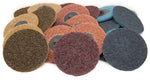
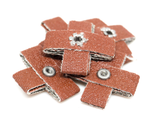
Sanding Discs (PSA & Hook & Loop) for pre-weld prep are essential tools when precision is more important than raw power. These discs are often used with a die grinder or small-angle tools to reach into corners or to prep delicate sheet metal.
PSA discs (Pressure Sensitive Adhesive) are simple peel-and-stick discs that provide a flat, firm contact with the metal. Hook & Loop systems offer the convenience of quick changes, making it easy to switch between grits. Using these is the best way to achieve a smooth, contamination-free weld surface. They allow for high-speed, controlled material removal compared to aggressive grinding, which helps prevent common mistakes like gouging or thinning the material.
For aluminum welding, a medium-grit sanding disc is often the perfect tool to strip the oxide layer without loading up the abrasive.
If you are looking to stock up on these essentials, you can explore our full range of sanding discs or specifically browse our PSA disc collection and Hook & Loop disc collection to find the right fit for your shop.
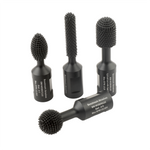
Wire Wheels, Brushes & Die Grinder Accessories
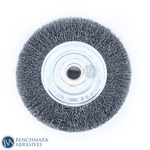
Sometimes you don't need to remove metal; you just need to remove what is on top of it. Wire brushing is the standard method to remove rust and loose scale without thinning the base metal. You can use manual brushes or wire wheels on a die grinder or angle grinder.
These tools are perfect for removing surface oxidation right before the welding arc starts. For carbon steel, wire wheels are incredibly fast and effective. It is critical to perform this surface cleaning before the filler metal application, as it ensures the metal bonds together at a molecular level. If you are working with stainless steel or aluminum, ensure you use a dedicated stainless steel wire brush that has never touched carbon steel to avoid cross-contamination and rust.
Using a Plasma Cutter Before Welding
If you use a plasma cutter to cut your parts to size, you have a specific prep task ahead of you. A plasma cut leaves behind slag and a thin layer of oxidation on the edge of the metal. If you leave this behind, it will ruin your weld pool stability.
Before you assemble your weld joint, take a flap disc or a file and clean the cut edges until they are bare metal. This is true for both mild steel and more sensitive aluminum welding. Taking five minutes to clean plasma-cut edges is a hallmark of a professional welding application.
Welding Safety and PPE for Surface Prep
Surface prep is just as dangerous as welding itself. You are dealing with high-speed spinning discs and flying metal shards. You must wear the correct safety equipment at all times.
While welding helmets protect you from the arc, they are not always the best choice for grinding. Most fabricators use a dedicated face shield and safety glasses for prep work. Eye protection is non-negotiable. Additionally, because grinders are incredibly loud, hearing protection is essential for long-term health. Always keep a fire extinguisher in your work area, as sparks from a grinding wheel can easily ignite sawdust or oily rags. Following these safety tips and best practices ensures you can stay in the shop for years to come.
Common Mistakes Beginners Make During Surface Prep
Even with the right tools, common mistakes can lead to a weak weld. One of the most common errors is failing to remove mill scale completely. Beginners often think that because the metal looks dark and smooth, it is clean. Mill scale is an insulator and will cause your arc to sputter.
Another mistake is over-grinding. If you remove too much of the base metal, you reduce the material thickness, which can lead to structural failure if you are following specific welding codes. Skipping the solvent cleaning step is another shortcut that leads to high-quality welds failing due to hidden grease. Finally, check your welding machine settings; no amount of prep can save a weld if your travel speed or voltage is incorrect for the job.
Matching Tools and Accessories to Your Welding Setup
Your prep tool should match your welding machine and the job requirements. A MIG welder setup often benefits from having a variety of welding accessories, like contact tips and wire brushes, nearby. TIG Welders require a more precise welding toolkit, including fine-grit sanding discs and dedicated stainless brushes.
Stick welder users should focus on heavy-duty slag hammers and stiff wire wheels. By matching your prep tools to your specific project, you ensure quality welds every time. When you are ready to upgrade your shop, keep an eye out for free shipping offers on bulk abrasives and consider signing up with your email address to receive the latest shop guides and deals.
Prep Right, Weld Strong: Build Better Results from the Ground Up
Proper surface preparation is the foundation of the trade. This guide to metal surface prep before welding shows that while tools like grinding wheels, flap discs, sanding discs, and wire wheels are simple, how you use them determines the strength of your project.
Prep metal for welding is just as important as the welding skills you develop over time. By taking the time to clean your metal surfaces to bare metal and ensuring a perfect weld joint fit-up, you guarantee clean welds and high-quality welds. If you want to see how the pros do it, be sure to visit our welder showcase hub for inspiration and more welding tips. Prep right, and your welds will be strong enough to stand the test of time.
Join Our Newsletter
Sign up to get the latest on sales, new releases and more …Join Our Newsletter
Sign up to get the latest on sales, new releases and more …Shop Categories
Recent Articles
- How to Choose the Right Diamond Blade for Grinder
- Wire Wheels and Brushes: How to Choose the Right One
- How to Deburr Metal Safely and Efficiently
- How to Reduce Heat Discoloration When Grinding Stainless Steel
- How to Achieve a Mirror Finish on Stainless Steel
- A Fabricator’s Guide to Surface Prep Before Powder Coating
- What Causes Burn Marks During Sanding and Grinding, and How to Prevent Them
- Beginner’s Guide to Metal Surface Prep Before Welding
- How to Choose the Right Abrasive Wheel for Your Grinder
- How to Use a Drum Sander: Step-by-Step Guide for Woodworking
Featured Products
-
 746 Reviews
4-1/2" x 7/8" T29 Zirconia High Density Flap Disc - 10 pack
$25.19
-
 738 Reviews
4-1/2" x .040 x 7/8" T1 Premium Thin Cut-off Wheel - 25 pack
$20.88
-
 220 Reviews
4-1/2" x 7/8" T27 Zirconia High Density Flap Disc - 10 pack
$25.19
-
 380 Reviews
6" x .045 x 7/8" T1 Premium Thin Cut-Off Wheel - 25 pack
$27.29
-
 55 Reviews
Nonwoven 6" x 9" Scuff, Clean & Finish Hand Pads
$0.83
-
 123 Reviews
4-1/2" x 1/4" x 7/8" T27 Depressed Center Grinding Wheel - 25 pack
$28.34


Blog Categories
- Abrasives
- Sanding
- Grinding Deburring Finishing
- Safety and Cleanliness
- Metal Working
- Selecting Tools And Equipment
- Wood Working
- Art And Design
- Diy Projects
- Industry 4.0
- Buffing
- Cutting Tools
- Carbide Burrs
- PPE
- Wire Brushes
- Bonded Abrasives
- TIG Electrodes
- Wire Wheels
- Bits
- Diamond Blades
- Power Brushes
- Product Reviews
- Grinding
- Finishing
- Industrial Cleaners