



























All You Need To Know About Forstner Vs. Auger Bit

Forstner and auger bits are two specialized wood boring tools engineered to tackle tasks that standard twist bits cannot. The Forstner bit excels at producing precise, clean, flat-bottomed holes in cabinetmaking, while the auger bit is designed to drill long, straight holes efficiently through thick stock. Understanding the distinct anatomy and purpose of each bit is crucial for selecting the right tool and achieving professional results.
Anatomy and Cutting Mechanism
The most significant difference between the two bits lies in how they initiate the cut and evacuate the wood chips.
The Forstner Bit
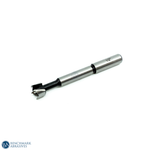
A Forstner bit is a spurless wood drill bit used primarily for drilling blind holes. Its defining feature is its ability to drill a hole with a perfectly flat bottom, unlike regular drill bits, which create a pointed or conical hole.
The forstner bit has three main components:
- Center Point/Spur: A small point that acts only as a pivot guide, not a cutting instrument.
- Peripheral Rim/Score Spur: The sharp outer rim that scores the wood fibers cleanly before the main cutters hit. This is what allows for perfectly clean edges and overlapping holes.
- Cutting Edges: The inner blades that shave the remaining material inside the scored circle, creating the flat bottom.
Mechanism: It cuts wood fibers at the perimeter first, resulting in exceptionally clean holes with no tear-out, making it ideal for precision work.
The Auger Bit
Auger bits are designed to drill deep holes and aggressively remove all of the material they cut. Its distinctive design lets it perform a self-feeding action.
The auger bit is characterized by its long shaft and deep spiral grooves:
- Lead Screw/Gimlet Point: A sharply threaded screw tip that acts as a guide and actively pulls the bit into the wood.
- Spurs (Lips): Cutting edges located just behind the lead screw that score the perimeter of the hole.
- Flutes/Spirals: Deep, wide channels that efficiently carry the large wood chips (excelsior) up and out of the deep hole.
Mechanism: The lead screw pulls the bit through the wood without requiring excessive downward force, ensuring the hole remains straight and clean, even when drilling through very thick stock or beams.
Forstner Vs. Auger Bit: Optimal Usage and Tool Pairing
The differences in design determine the best speed and power tool needed for each application.
| Feature | Forstner Bit | Auger Bit |
| Core Function | Flat-bottomed, precise, clean-edged holes. | Deep, long, and efficient straight bores. |
| Hole Bottom | Flat | Pointed (due to the lead screw) |
| Shaft Length | Short | Very Long |
| Optimal Speed | Slow (Low RPM) for precision and cooling. | Moderate/Controlled RPM to clear chips. |
| Ideal Tool | Drill Press (for perpendicular precision). | Hand Brace (traditional) or High-Torque Drill/Impact Driver. |
| Main Application | Concealed hinges, dowel joints, pocket holes. | Running cables, inserting pipes, and deep structural bores. |
Forstner Vs. Auger Bit: Tool Compatibility and Safety
The Forstner bit requires low speed and high control, making the drill press its ideal partner to ensure perfectly perpendicular cuts.
The auger bit, due to its self-feeding lead screw, works best with high-torque, lower-RPM tools like a powerful drill or impact driver. Caution: When using an auger bit, maintaining a moderate, controlled speed is critical. Drilling too fast can cause the lead screw to advance the bit quicker than the flutes can clear the material, resulting in high strain and dangerous kickback.
Forstner Vs. Auger Bit: Main Applications
Forstner Bits are essential in furniture and cabinet making. They are used to drill holes that stop short of the other side (blind holes), such as those required for European concealed hinges or for creating clean pockets for decorative inlays. They can also cut clean entry points on angled or curved surfaces.
Auger Bits are used when depth and clean chip evacuation are the priority. They are vital for carpentry and structural work to drill deep holes quickly for running electrical cables, plumbing pipes, or long dowel rods through thick timber beams.
Join Our Newsletter
Sign up to get the latest on sales, new releases and more …Join Our Newsletter
Sign up to get the latest on sales, new releases and more …Shop Categories
Recent Articles
- Resin Fiber Discs vs Flap Discs: When Should You Use Each?
- Best Abrasives for Rust Removal on Steel
- Cut-Off Wheels vs Band Saws: Which is Better for Metal Cutting
- How to Optimize RPM Abrasive Disc Performance & Lifespan
- Surface Conditioning Discs: A Fabricator's Guide
- Best Flap Disc for Stainless Steel: Complete Fabricator’s Guide
- Ceramic vs Zirconia Flap Discs: Which Performs Better for Metal Fabrication
- How to Choose the Right Grit for Metal Sanding Projects
- Tools Collection for Fabrication and Abrasive Workflows
- How to Choose the Right Diamond Blade
Featured Products
-
 746 Reviews
4-1/2" x 7/8" T29 Zirconia High Density Flap Disc - 10 pack
$25.19
-
 738 Reviews
4-1/2" x .040" x 7/8" t1 premium thin cut-off wheel - 25 pack
$20.88
-
 220 Reviews
4-1/2" x 7/8" T27 Zirconia High Density Flap Disc - 10 pack
$25.19
-
 380 Reviews
6" x .045 x 7/8" T1 Premium Thin Cut-Off Wheel - 25 pack
$27.29
-
 55 Reviews
Nonwoven 6" X 9" Scuff, Clean & Finish Hand Pads
$0.83
-
 123 Reviews
4-1/2" x 1/4" x 7/8" T27 Depressed Center Grinding Wheel - 25 pack
$28.34


Blog Categories
- Abrasives
- Sanding
- Grinding Deburring Finishing
- Safety and Cleanliness
- Metal Working
- Selecting Tools And Equipment
- Wood Working
- Art And Design
- Diy Projects
- Industry 4.0
- Buffing
- Cutting Tools
- Carbide Burrs
- PPE
- Wire Brushes
- Bonded Abrasives
- TIG Electrodes
- Wire Wheels
- Bits
- Diamond Blades
- Power Brushes
- Product Reviews
- Grinding
- Finishing
- Industrial Cleaners