



























What Kind of Sanding Belt is Best for Metal - Complete Guide 2026

Most metalworkers learn about sanding belts the hard way. You buy what seems reasonable, start your project, and within minutes, the belt either shreds apart or leaves your metal looking worse than when you started.
The problem isn't your technique—it's your selected belt. Different metals require different abrasives, and using aluminum oxide on stainless steel delivers very different results than ceramic or zirconia. If you get the pairing wrong, you'll burn through belts and waste material or end up with surface damage that requires extensive rework.
Understanding which belt works for which application isn't complicated, but it does require knowing the basics. Aluminum, steel, and stainless steel respond differently to various abrasive materials. Grit selection matters as much as belt type, and backing material affects durability and finish quality.
This guide covers the fundamental differences between belt types, proper grit selection for different metals, and when to use each combination. The goal is straightforward: get better results while avoiding the common mistakes that cost time and materials.
Understanding Metal Sanding Belt Basics
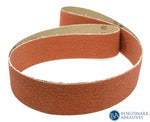
A metal sanding or abrasive belt is a versatile attachment for shaping, grinding, and finishing metal surfaces. It is made of abrasive grains bonded to a cloth backing and can be used with power or hand tools.
Belt sanders are available in handheld, stationary, and portable models that work with various belt sizes. They’re suitable for everything from fine finishing to aggressive material removal. The belt’s backing influences flexibility, durability, and finish quality.
Use belt sanders for large, flat surfaces or aggressive removal. Hand tools are better suited for detail work, tight corners, and soft finishing tasks where control and finesse matter.
Different Types of Sanding Belts for Metalworking
Aluminum Oxide Belts
Aluminum oxide belts are the best sanding belts for various metal types. They are durable and cost-effective, offering reliable material removal and a smooth finish—ideal for general metalworking tasks.
Ceramic Sanding Belts
Ceramic sanding belts stand out for their durability and cutting power, making them perfect for heavy-duty use. They resist heat buildup and maintain performance under continuous use, especially on dense and hard metals.
Zirconia Oxide Belts
Zirconia belts are known for aggressive material removal and self-sharpening properties. They’re well-suited for high-pressure applications on tough metals like steel or cast iron and last longer than aluminum oxide belts.
Silicon Carbide Belts
Silicon carbide belts work well on softer, non-ferrous metals like brass and aluminum. Lightweight and sharp, they excel in polishing and finishing tasks where precision is key.
Matching The Best Belts To Your Metalworking Needs
Different metals demand different abrasives. Zirconia and ceramic sanding belts are ideal for hard metals like stainless steel for their durability and cutting strength. Ceramic belts handle heat efficiently, while zirconia excels in initial shaping and grinding.
Aluminum oxide belts work well on carbon and mild steels, offering effective removal and a clean finish. Silicon carbide belts are the best choice for non-ferrous metals such as aluminum, copper, and brass. They deliver a smooth surface without damaging softer materials.
Choosing The Right Belt For Metalworking
Belt selection depends on the type of metal. Harder materials require abrasive belts that offer high cutting efficiency and durability. Ceramic and zirconia belts are engineered to perform under these conditions while minimizing wear.
Stainless steel and titanium generate heat during grinding. In these cases, use ceramic belts or other heat-resistant options to avoid discoloration, surface hardening, or belt breakdown.
Grit Selection and Surface Finishing
Grit size determines how aggressively a belt removes material. Here's how to choose the right grit for each stage:
-
Coarse Grit (24–60): Best for heavy stock removal and initial surface prep
-
Medium Grit (80–120): Ideal for shaping and intermediate smoothing
-
Fine Grit (150–220+): Used for final finishing or pre-polish refinement
Start with coarse grits for shaping, switch to medium for smoothing, and finish with fine grits to achieve a polished, even surface.
Related Article: Best Sandpaper For Metal
Advanced Belt Features and Applications
Modern sanding belts are built to withstand high-speed, high-pressure use without quickly wearing out. Heavy-duty belts last longer in industrial settings and help maintain consistent performance across large projects.
The coating design affects performance:
-
Open-Coat Belts have spaced abrasive grains for fast cutting and better heat dissipation.
-
Closed-Coat Belts have full abrasive coverage for precision finishing.
Working at higher speeds increases efficiency but can shorten belt life. Choosing a belt suited for your machine’s speed and pressure levels will optimize both finish and durability.
Sanding Belt Construction: Open-Coat Vs Closed-Coat Belts
Understanding the construction of sanding belts is crucial for optimal results. Here are the key differences between open-coat and closed-coat sanding belts, highlighting how each design impacts performance, longevity, and ideal applications.
| Feature | Open-Coat Belts | Closed-Coat Belts |
| Material Removal | Provides aggressive material removal | Smooth finish, less aggressive |
| Applications | Heavy-duty, industrial applications | Fine finishing and polishing |
| Heat Dissipation | Better heat dissipation, ideal for high-speed | Less heat dissipation, ideal for light work |
Specialized Applications and Finishing Techniques
Finishing the surface with an ideal technique is a step-by-step process. Switching from sanding to final polishing is important to achieve a mirror-like finish. Start by smoothing the material with your sanding belts, then change to polishing belts for the perfect final touch.
These polishing belts are designed for fine polishing, work best on different metals and plastics to create a high-gloss finish, or even a mirror polish. Proper technique and the right abrasives can turn an ordinary surface into a perfect final finish, elevating any project to a professional standard. If your sanding goals, like a high-gloss finish and fine polishing, are achieved, switch from sanding belts to other abrasives.
Choosing the Perfect Metal Sanding Belt
Now you know the secret to consistent, professional-quality finishes. It begins with understanding how to choose the right sanding belt for your metalworking tasks. Selecting the correct belt based on grit material and working metal surfaces ensures efficient material removal and detailed finishing.
Using the right belt combination for common applications like shaping steel, aluminum, or hard metals will make your project smoother and more effective. Using the optimal belt speed, ensuring proper tension, avoiding excessive pressure, and regularly checking for wear will improve belt life.
Lastly, don’t be afraid to experiment with different combinations. With the right approach and tools, you will consistently deliver the best results and professional-quality finishes every time.
Join Our Newsletter
Sign up to get the latest on sales, new releases and more …Join Our Newsletter
Sign up to get the latest on sales, new releases and more …Shop Categories
Recent Articles
- Resin Fiber Discs: Proper Storage and Handling Techniques
- Sanding Belt Safety Tips: Best Practices for Safe Operation
- 1X30 Sanding Belts for Metalworking & Knife Making
- Why Sanding Belts Stop Cutting Efficiently
- Best Sanding Discs for Automotive Paint Preparation
- How to Change Sandpaper on a Drum Sander
- Sanding Drums for Metal, Finishing, and Deburring
- Sanding Disc Accessories: Backing Pads & Disc Tools
- Random Orbital Sander
- Ways to Remove Rust from Metal
Featured Products
-
 746 Reviews
4-1/2" x 7/8" T29 Zirconia High Density Flap Disc - 10 pack
$25.19
-
 738 Reviews
4-1/2" x .040" x 7/8" t1 premium thin cut-off wheel - 25 pack
$20.88
-
 220 Reviews
4-1/2" x 7/8" T27 Zirconia High Density Flap Disc - 10 pack
$25.19
-
 380 Reviews
6" x .045 x 7/8" T1 Premium Thin Cut-Off Wheel - 25 pack
$27.29
-
 55 Reviews
Nonwoven 6" X 9" Scuff, Clean & Finish Hand Pads
$0.83
-
 123 Reviews
4-1/2" x 1/4" x 7/8" T27 Depressed Center Grinding Wheel - 25 pack
$28.34


Blog Categories
- Abrasives
- Sanding
- Grinding Deburring Finishing
- Safety and Cleanliness
- Metal Working
- Selecting Tools And Equipment
- Wood Working
- Art And Design
- Diy Projects
- Industry 4.0
- Buffing
- Cutting Tools
- Carbide Burrs
- PPE
- Wire Brushes
- Bonded Abrasives
- TIG Electrodes
- Wire Wheels
- Bits
- Diamond Blades
- Power Brushes
- Product Reviews
- Grinding
- Finishing
- Industrial Cleaners