






























Die Grinder Attachments: Burrs, Wire Wheels, Flap Wheels, Cut-Off Wheels and Sanding Discs

Die grinder attachments fit when the shank matches your collet, usually 1/4 inch, and when every part of the setup is rated at or above your grinder's speed. Our straight die grinder runs 25,000 RPM, and our right-angle model runs 15,000 RPM. Burrs, small wire wheels, 2 and 3 inch cut-off wheels and Type R quick change discs clear 25,000 RPM. Many other attachments do not.
Key Takeaways
- Most die grinder attachments have a 1/4 inch shank. Small bits use 1/8 inch with the matching collet.
- A setup can spin only as fast as its lowest-rated part, so check the wheel, the holder and the tool.
- Rated burrs, 1-1/2 and 2-1/2 inch wire wheels, 2 and 3 inch cut-off wheels and Type R quick change discs fit a 25,000 RPM grinder.
- Wire cups (13,000 RPM), nylon wheels (10,000), interleaf, surface conditioning and felt flap wheels (10,000 to 12,000), and cartridge rolls (23,000) need a slower tool or speed control.
- Drum ratings change by size, from 30,000 RPM for the 1/2 x 1/2 inch drum to 6,000 RPM for the 2 x 2 inch drum.
What attachments fit a die grinder?
Most die grinder attachments have a 1/4 inch shank. Some small bits have a 1/8 inch shank and need the matching collet, which our straight die grinder includes. The shank is the part that goes into the collet. Discs and wheels do not have a shank. They mount on a mandrel or holder, and that part has the shank.
We stock burrs, wire wheels and brushes, flap wheels, cut-off wheels, Type R quick change discs, cartridge rolls, expanding drums and buffing kits. The table lists the max RPM for each and shows whether it clears a 25,000 RPM straight grinder.
|
Attachment (size, shank) |
What it does |
Max RPM / fits 25,000 RPM straight die grinder? |
|
Carbide burrs, 1/4 or 1/8 inch shank |
Shapes, deburrs, blends welds and opens holes |
Rated by head diameter. Fits when the burr page lists 25,000 RPM or higher |
|
Mounted crimped wire wheels, 1-1/2 and 2-1/2 inch, 1/4 inch shank |
Removes light to medium rust, paint and scale |
25,000 RPM. Yes |
|
Mounted wire wheels, 3 and 4 inch, 1/4 inch shank |
Covers more surface per pass |
15,000 RPM. No. Right-angle grinder or speed control |
|
Wire cups, crimped or knotted, 1/4 inch shank |
Cleans flat faces, scale and weld spatter |
13,000 RPM. No. Needs speed control |
|
Bristle brushes, 2 and 3 inch, 1/4 inch shank |
Removes coatings with a lighter touch |
25,000 RPM max, recommended 15,000 to 25,000. Yes |
|
Nylon mandrel wheels and cup brushes, 1/4 inch shank |
Cleans and conditions with less gouging |
10,000 RPM. No. Needs speed control |
|
Aluminum oxide flap wheels, 3/4 to 3 inch, 1/4 inch shank |
Blends, deburrs and removes light stock |
30,000 (3/4 and 1 inch), 25,000 (1-1/2 and 2 inch), 20,000 (2-1/2 and 3 inch). Yes up to 2 inch |
|
Zirconia flap wheels, 1 to 3 inch, 1/4 inch shank |
Removes stock faster with self-sharpening grain |
30,000 (1 inch), 25,000 (1-1/2 to 3 inch). Yes |
|
Interleaf, surface conditioning and felt flap wheels, 1/4 inch shank |
Blends, finishes and polishes |
10,000 to 12,000 RPM by type and size. No. Needs speed control |
|
Type R quick change discs, 2 and 3 inch, on a 1/4 inch shank holder |
Sands and blends faces, edges and welds |
25,000 RPM. Yes |
|
Cartridge roll mandrel and tapered cartridge rolls |
Sands holes, ports and curves |
23,000 RPM. No. Needs speed control |
|
Rubber expanding drums, 1/2 x 1/2 to 2 x 2 inch |
Holds a sanding sleeve for inside diameters |
Rated size by size (see the sanding table). Only the 1/2 x 1/2 inch drum clears 25,000 RPM |
|
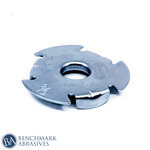
Cut-off wheels, 2 and 3 inch x 3/8 inch arbor, on the BM-M38_1 mandrel |
Makes narrow cuts in tight spots |
25,000 RPM. Yes |
|
Cut-off wheel, 4 x 1/16 x 3/8 inch |
Cuts with a wider reach |
22,000 RPM. No. Needs speed control |
|
Buffing kits, 2 and 3 inch |
Polishes after sanding |
Read the max RPM marked on the kit. Confirm it is at or above your grinder speed |
The tool matters too. A right-angle head reaches spots a straight body cannot, and our die grinder vs angle grinder comparison shows when a die grinder is the wrong choice.
How do you match an attachment to die grinder RPM?
Use the lowest-rated part as your limit. If a wheel is rated 20,000 RPM and its mandrel is rated 25,000 RPM, the setup tops out at 20,000 RPM. Your grinder must run at or below that number.
Our straight pneumatic die grinder runs 25,000 RPM at 90 PSI and takes 1/4 and 1/8 inch collets. Treat it as a fixed 25,000 RPM tool unless you have a way to control its speed.
Our right-angle die grinder runs 15,000 RPM. That suits 3 and 4 inch mounted wire wheels and the 1 inch and larger drums. Wire cups, nylon wheels and most finishing flap wheels still sit below it.
These attachments need a slower tool or speed control on a 25,000 RPM straight grinder:
- 3 and 4 inch mounted wire wheels (15,000 RPM)
- Wire cups (13,000 RPM) and nylon wheels (10,000 RPM)
- Interleaf, surface conditioning and felt flap wheels (10,000 to 12,000 RPM)
- Cartridge rolls (23,000 RPM) and every rubber drum except the 1/2 x 1/2 inch size
- The 4 x 1/16 x 3/8 inch cut-off wheel (22,000 RPM)
Which carbide burrs work on a die grinder?
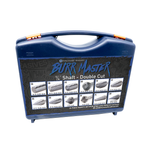
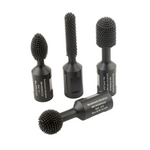
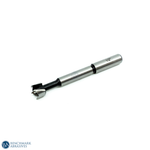
A die grinder burr bit is a carbide cutting head on a solid shank. Choose a 1/4 inch shank for routine deburring and heavier stock removal. Choose 1/8 inch for detail work and tight spots, with a grinder that has the 1/8 inch collet. Long-shank burrs reach recessed welds and ports.
Shape sets where the burr works best. Cylinders suit flat faces and edges, balls open and round holes, flame and tree shapes follow contours, and cones and tapers reach corners. Cut type matters as much as shape, and our single-cut vs double-cut guide explains which one suits your metal.
Burr max RPM changes with head diameter, so read the rating on the burr's product page before it goes in the collet. We keep burr speeds out of this guide because one table cannot cover every diameter.
Shop Benchmark carbide burrs by shape and size.
Which burrs work best for aluminum?
Aluminum die grinder bits need wide flutes. Soft metal packs into a standard burr and loads it up in seconds. An aluma-cut burr has a flute pattern that clears the chips. Our aluma-cut burr collection has 1/4 inch shank options. Use light pressure and a cutting wax or lubricant.
What wire wheel fits a die grinder?
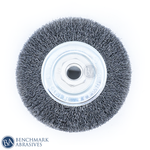
A wire wheel for a die grinder has a 1/4 inch shank and a crimped wire face. Crimped wire suits light to medium rust, paint and scale. Carbon steel is the standard pick. Choose stainless wire on stainless parts so you do not leave carbon steel residue behind.
Size sets the speed limit. Our 1-1/2 inch wheel with .008 inch wire and our 2-1/2 inch wheel with .014 inch wire are both rated 25,000 RPM. The 3 and 4 inch wheels drop to 15,000 RPM. See the 1-1/2 inch mounted crimped wire wheel page for the rating as we print it.
|
Mounted wire wheel / cup (size, wire, gauge) |
What it does |
Max RPM and when to use |
|
1-1/2 inch mounted crimped wheel, carbon steel, .008 inch wire |
Cleans rust and paint in tight spots |
25,000 RPM. Straight or right-angle grinder |
|
2-1/2 inch mounted crimped wheel, carbon steel, .014 inch wire |
Handles broader light to medium cleanup |
25,000 RPM. Straight or right-angle grinder |
|
1-1/2 and 2-1/2 inch mounted wheel, stainless wire, gauge on product page |
Cleans stainless without carbon steel residue |
25,000 RPM. Straight or right-angle grinder |
|
3 and 4 inch mounted crimped wheel, carbon steel, gauge on product page |
Covers large areas fast |
15,000 RPM. Right-angle grinder or a speed-controlled tool |
|
4 inch mounted wheel, stainless wire, gauge on product page |
Covers large stainless areas |
15,000 RPM. Right-angle grinder or a speed-controlled tool |
|
1-1/2 x 1/4 inch and 2-3/8 inch crimped cups, 3 x 1/2 x 1/4 inch knotted cup, carbon steel |
Cleans flat faces, heavy scale and weld spatter |
13,000 RPM. Speed-controlled tool only |
|
2 and 3 inch bristle brushes |
Removes coatings and cleans delicate surfaces |
25,000 RPM max. Run 15,000 to 25,000 on either grinder |
|
3 inch nylon flap brush, 4 inch nylon wire wheel, 2-1/2 inch nylon cup brush, all 1/4 inch shank |
Cleans and conditions with less gouging |
10,000 RPM. Speed-controlled tool only |
Mounted wire cups and nylon abrasive wheels
Wire cups clean flat faces, heavy scale and weld spatter. Our crimped and knotted cups are rated 13,000 RPM, so they need a slower tool. Nylon mandrel wheels and cup brushes are rated 10,000 RPM and clean with less gouging, which suits softer metals and finished surfaces.
Bristle brushes are the exception. Our 2 and 3 inch bristle brushes are rated 25,000 RPM max, with 15,000 to 25,000 RPM recommended, so they run on either grinder. The power brush collection lists every size.
Can you use flap wheels on a die grinder?
Yes, when the wheel has a 1/4 inch shank and a rating at or above your grinder's speed. Aluminum oxide and zirconia flap wheels are the die grinder workhorses. On a 25,000 RPM straight grinder, aluminum oxide wheels up to 2 inch and every zirconia size clear the limit. The 2-1/2 and 3 inch aluminum oxide wheels are rated 20,000 RPM. Browse the flap wheel collection to compare sizes.
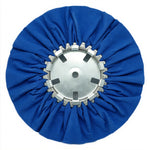
Interleaf, surface conditioning and felt wheels are different. Their ratings run 10,000 to 12,000 RPM, so they need a speed-controlled tool and never belong on a fixed-speed grinder. Each product page lists the grits for that wheel, so match grit to the job there.
What size cut-off wheel fits a die grinder?
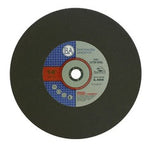
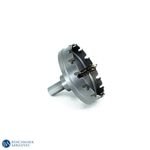
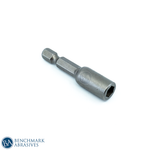
A mini cut-off wheel for a die grinder has a 3/8 inch center hole, called the arbor. It mounts on a mandrel, not on the tool. The BM-M38_1 mandrel has a 1/4 inch shank for your collet, plus 3/8 inch and 1/4 inch heads for the wheel. It is rated 25,000 RPM.
|
Wheel (2/3/4 inch x thickness x 3/8 inch) |
What it does |
Mandrel + max RPM |
|
2 x 1/32 x 3/8 inch, Type 1 |
Cuts thin stock and small slots |
BM-M38_1 mandrel, 25,000 RPM |
|
2 x 1/16 x 3/8 inch, Type 1 |
Cuts small bar, tube and fasteners |
BM-M38_1 mandrel, 25,000 RPM |
|
3 x .040 x 3/8 inch, Type 1 |
Makes a thin kerf with extra reach |
BM-M38_1 mandrel, 25,000 RPM |
|
3 x 1/16 x 3/8 inch, Type 1 |
Cuts general stock with extra reach |
BM-M38_1 mandrel, 25,000 RPM |
|
3 x 1/8 x 3/8 inch, Type 1 |
Cuts thicker stock with more wheel life |
BM-M38_1 mandrel, 25,000 RPM |
|
4 x 1/16 x 3/8 inch |
Cuts with the widest reach |
22,000 RPM. Not for a fixed 25,000 RPM grinder |
We stock 2 and 3 inch Type 1 wheels in thin cuts, all rated 25,000 RPM. A good starting point is the 2 x 1/16 x 3/8 inch wheel, sold as a 25 pack. The 4 inch wheel is the outlier at 22,000 RPM, so it needs a right-angle or speed-controlled tool.
Mount the wheel on the mandrel
Slide the wheel onto the 3/8 inch head, seat it flat and tighten the screw. Look for cracks or chips first, and never mount a wheel that is damaged.
Seat the shank and check the guard
Push the mandrel shank fully into the 1/4 inch collet and tighten it. Add any guard your tool or wheel maker specifies, and clamp the workpiece before you start.
Cut straight with light pressure
Let the wheel do the work and keep the cut in line with the wheel face. Side pressure can break a thin wheel. Wear a face shield, and review our cut-off wheel collection when you need more wheels.
How do you sand with a die grinder?
A die grinder sanding disc, a cartridge roll or an expanding drum each fits a different job. Pick by the shape of the surface, then check the holder and the max RPM in the table.
|
Attachment (QC disc, cartridge roll, drum size) |
What it does |
Holder/mandrel needed and max RPM |
|
2 inch Type R quick change disc, zirconia |
Sands faces, edges and small welds |
2 inch Type R holder, 1/4 inch shank. 25,000 RPM |
|
3 inch Type R quick change disc |
Covers more surface per pass |
3 inch Type R holder, 1/4 inch shank. 25,000 RPM |
|
Cartridge rolls, including tapered |
Sands holes, ports and curves |
Cartridge roll mandrel. 23,000 RPM |
|
1/2 x 1/2 inch rubber expanding drum |
Sands small inside curves |
Expanding drum and sleeve. 30,000 RPM |
|
1/2 x 1 inch rubber expanding drum |
Sands inside curves |
Expanding drum and sleeve. 20,000 RPM |
|
3/4 x 3/4 inch rubber expanding drum |
Sands curves and bores |
Expanding drum and sleeve. 24,000 RPM |
|
3/4 x 1 inch rubber expanding drum |
Sands curves and bores |
Expanding drum and sleeve. 19,000 RPM |
|
1 x 1 and 1-1/2 x 1-1/2 inch rubber expanding drum |
Sands larger bores |
Expanding drum and sleeve. 15,000 RPM |
|
2 x 2 inch rubber expanding drum |
Sands wide inside diameters |
Expanding drum and sleeve. 6,000 RPM |
Type R quick change discs
Type R quick change discs come in 2 and 3 inch sizes and snap onto a Type R holder with a 1/4 inch shank. Both the holders and the discs are rated 25,000 RPM, which suits our straight die grinder. Zirconia discs sand fast on flat faces, edges and small welds. See the full quick change disc collection for grits.
Cartridge rolls
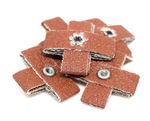
Cartridge rolls are small coated abrasive cylinders that slide onto a mandrel. They sand inside holes, ports and curves. The mandrel and the tapered rolls are rated 23,000 RPM, below our straight grinder's 25,000 RPM. Browse cartridge rolls to see the sizes.
Sanding rolls for a die grinder come in several types, and the cartridge roll types guide explains each one.
Rubber expanding drums
A die grinder sanding drum holds a sleeve that grips when the drum spins. Ratings drop as drums get larger: 30,000 RPM for the 1/2 x 1/2 inch drum, 20,000 for 1/2 x 1, 24,000 for 3/4 x 3/4, 19,000 for 3/4 x 1 and 15,000 for 1 x 1 and 1-1/2 x 1-1/2. The 2 x 2 inch drum is rated only 6,000 RPM. Match the drum size to your grinder before you buy.
Can you polish with a die grinder?
Yes. A die grinder polishing wheel handles the last step after sanding. We stock 2 and 3 inch die grinder buffing kits, and felt flap wheels hold polishing compound at 10,000 RPM. Read the max RPM marked on the kit or wheel, and keep your grinder at or below it. Compare buffing kits to find the one that fits your finish.
What else should you know about die grinder attachments?
What size shank do die grinder attachments use?
Most die grinder attachments use a 1/4 inch shank. Smaller bits and detail tools may use a 1/8 inch shank, which needs the matching 1/8 inch collet. Our straight die grinder takes both. The shank is the part that enters the collet. A wheel or disc has an arbor hole instead, and that hole must match its mandrel or holder.
Can you put a 4 inch wire wheel on a die grinder?
Yes, on a tool that runs 15,000 RPM or slower. Our 4 inch mounted wire wheels are rated 15,000 RPM. They fit our right-angle die grinder, but they are too slow for our 25,000 RPM straight die grinder unless you can control its speed. If you are choosing a tool for them, our best right-angle die grinders review compares models.
Do I need a guard to use a cut-off wheel on a die grinder?
Use the guard that the grinder, mandrel or wheel maker specifies for your setup. A guard does not replace a face shield, a wheel inspection, a clamped workpiece or a straight cut with no side pressure. For background on wheel guarding, read the OSHA abrasive wheel machinery standard, which covers guarding and wheel mounting for wheel machines.
What is the best die grinder bit for aluminum?
An aluma-cut carbide burr is the best match for aluminum. Its wide flutes clear chips that would clog a standard burr. Use light pressure and a cutting wax or lubricant. For stainless or mild steel, our burr selection by metal guide helps you pick the right cut.
Can you use sanding discs on a die grinder?
Yes. Mount a 2 or 3 inch Type R quick change disc on a Type R holder with a 1/4 inch shank. The holder and disc are rated 25,000 RPM. For holes, ports and curves, use a cartridge roll or an expanding drum instead. Our quick change discs guide covers the disc types.
Why does my die grinder accessory say a lower max RPM than my grinder?
The accessory sets the limit, not the tool. A wheel, brush, roll or drum that fits the collet can still be rated below the grinder's speed, and running it faster risks a failure. Pick a slower tool or add speed control. If you are choosing a new tool, compare the best straight die grinders first.
Match the shank to the collet, check the lowest RPM rating and pick the attachment for the job. Do that, and your die grinder attachments run safely and cut cleanly. Ready to stock up? Start with our carbide burr range.
Join Our Newsletter
Sign up to get the latest on sales, new releases and more …Join Our Newsletter
Sign up to get the latest on sales, new releases and more …Shop Categories
Recent Articles
- Die Grinder Attachments: Burrs, Wire Wheels, Flap Wheels, Cut-Off Wheels and Sanding Discs
- Resin Fiber Discs vs Flap Discs: When Should You Use Each?
- Best Abrasives for Rust Removal on Steel
- Cut-Off Wheels vs Band Saws: Which is Better for Metal Cutting
- How to Optimize RPM Abrasive Disc Performance & Lifespan
- Surface Conditioning Discs: A Fabricator's Guide
- Best Flap Disc for Stainless Steel: Complete Fabricator’s Guide
- Ceramic vs Zirconia Flap Discs: Which Performs Better for Metal Fabrication
- How to Choose the Right Grit for Metal Sanding Projects
- Tools Collection for Fabrication and Abrasive Workflows
Featured Products
-
 746 Reviews
4-1/2" x 7/8" T29 Zirconia High Density Flap Disc - 10 pack
$25.19
-
 738 Reviews
4-1/2" x .040" x 7/8" t1 premium thin cut-off wheel - 25 pack
$20.88
-
 220 Reviews
4-1/2" x 7/8" T27 Zirconia High Density Flap Disc - 10 pack
$25.19
-
 380 Reviews
6" x .045 x 7/8" T1 Premium Thin Cut-Off Wheel - 25 pack
$27.29
-
 55 Reviews
Nonwoven 6" X 9" Scuff, Clean & Finish Hand Pads
$0.83
-
 123 Reviews
4-1/2" x 1/4" x 7/8" T27 Depressed Center Grinding Wheel - 25 pack
$28.34


Blog Categories
- Abrasives
- Sanding
- Grinding Deburring Finishing
- Safety and Cleanliness
- Metal Working
- Selecting Tools And Equipment
- Wood Working
- Art And Design
- Diy Projects
- Industry 4.0
- Buffing
- Cutting Tools
- Carbide Burrs
- PPE
- Wire Brushes
- Bonded Abrasives
- TIG Electrodes
- Wire Wheels
- Bits
- Diamond Blades
- Power Brushes
- Product Reviews
- Grinding
- Finishing
- Industrial Cleaners